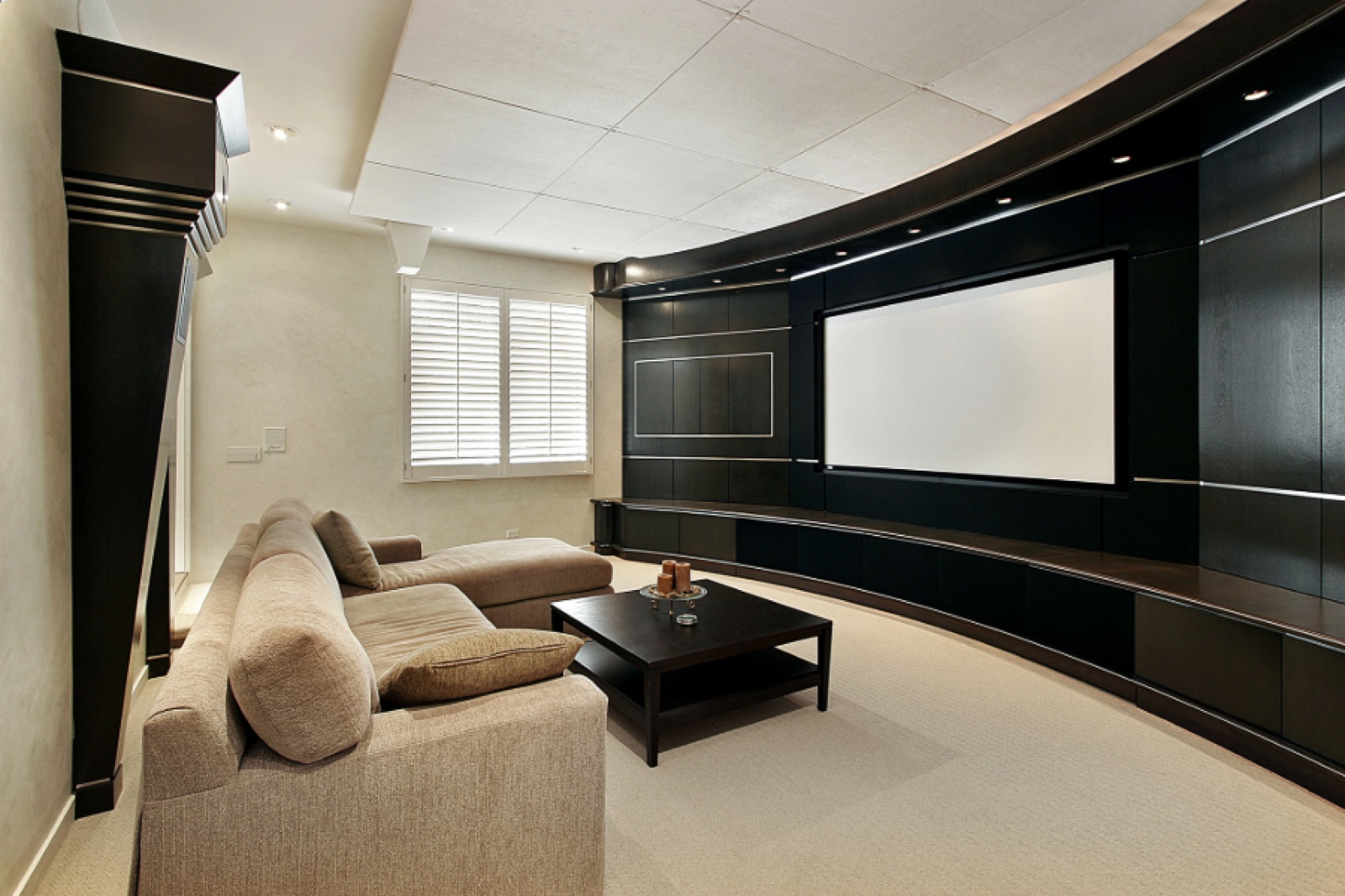
The difference between a TV room and a home theater shows up in the first five minutes of a movie. In a TV room, you watch the screen. In a theater, the room disappears: the picture fills your field of view, the sound arrives from where the action is, and nobody reaches for a light switch or a second remote. Getting there takes a series of decisions made in the right order, and after three decades in the business, we can tell you the order matters more than the budget.
This guide walks through those decisions the way we walk clients through them: room first, then picture, then sound, then the wiring and control that hold it together.
Start With the Room, Because the Room Decides Everything
Every choice downstream depends on the space. The best candidate rooms share three traits: you can control the light, you can control the sound, and the seating can face the screen at a sensible distance. A windowless media room is ideal, but a bonus room or converted bedroom works when you add blackout treatments and solid-core doors.
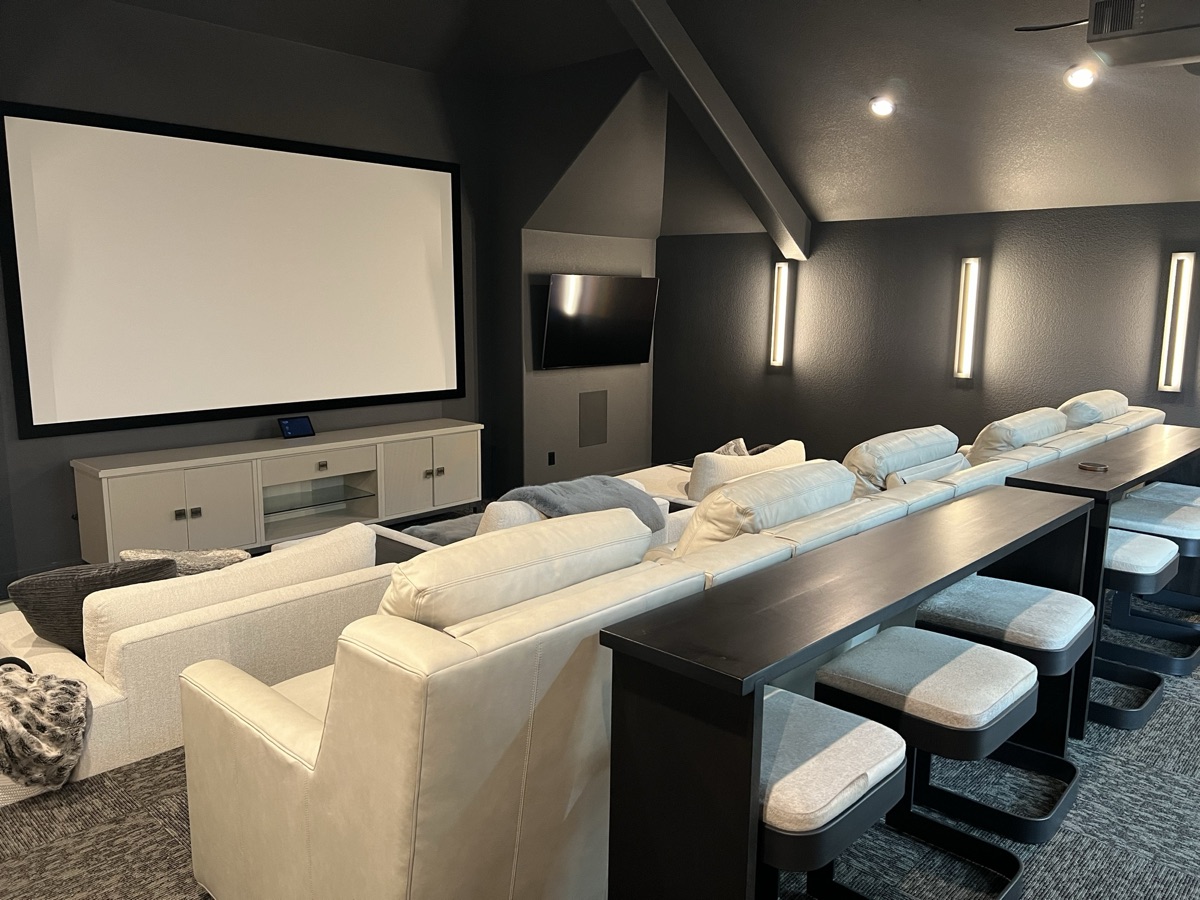
Dark, matte wall colors around the screen keep reflected light from washing out the picture. Carpet and soft furnishings tame the echo that hard floors and bare walls create. And think about who sits where before any equipment is chosen: in our Kingsland Residence project, raised seating platforms give every row a clear sightline, with a bar-height row at the back so a full house still has good seats.
Size the Screen to the Seats, Then Pick the Projector
Screen size is a function of viewing distance. A useful rule of thumb: sit at roughly 1 to 1.5 times the screen’s diagonal for a cinematic picture. However, sitting closer to the screen is perfectly acceptable, especially for the little ones, or the viewer that loves that front-row oversized experience. Working backward from where the seats will be, tells you what the room can support, and it is usually larger than people expect.
For dedicated theaters we favor laser projection: it delivers a bright, accurate picture, holds that brightness for tens of thousands of hours, and turns on instantly with no lamp warm-up. Pair it with an acoustically transparent screen and the front speakers hide directly behind the picture, which is where movie sound editors assume they are, and how all movie cinemas are actually built. The Kingsland theater runs a laser projector on a 165-inch acoustically transparent screen, flanked by two flat panels so game days can show three feeds at once. You could also add a video tiler for each screen and have up to nine sporting events with one taking center stage, creating the ultimate sports-fan experience.
Sound Carries Half the Experience
A great picture with thin sound still feels like a TV room. A surround layout starts at 5.1 (five speakers and a subwoofer) and grows to 7.2 or a Dolby Atmos layout with overhead channels as the room allows. Placement follows the format’s geometry, so plan speaker locations with the seating chart in hand, and always work from the Dolby reference models: the Dolby standard was designed around those exact specifications. AV receivers often have audio calibration built in, which further tailors the sound to your room by factoring in the listener’s distance from each speaker in the setup. Many of these calibrations also account for multiple listening positions, refining the final audio experience.
None of this has to be visible. In-wall subwoofers deliver serious low end while keeping the floor clear, and in-wall and in-ceiling speakers can match the performance of cabinet speakers when they are chosen and placed well. Speaker grilles can often be factory painted and color matched to the brand, color, and sheen of your room’s painted surfaces, so they disappear into a dark theater wall with no white grille to give them away. Every speaker in the Kingsland theater is hidden, and the room gives up nothing for it. For a deeper look at layouts, see our post on choosing a home theater surround sound system.
Wiring and Control Decide Whether You Actually Use It
The least glamorous part of a theater is the part that makes it dependable: the wiring behind the walls and the control system in front of them. If you are building or remodeling, handle the wiring before the drywall closes. Run conduit between the equipment location, often under the screen or in a remote location, and the projector. Speaker locations get actual speaker wire, ideally 14 gauge or heavier to mitigate amplification loss over distance; 16 gauge can work, but 14 gauge will serve you better, especially on longer runs. Streaming a 4K movie leans on the home network too, so include structured wiring that gives the theater its own wired connection back to the rack.
Control is what turns a rack of equipment into a room your family uses. One touch should dim the lights, drop the screen, set the sound, and start the movie. We build our theater control systems on Control4 or RTI so a guest can run the room from a single remote, phone app, or touch screen without a tutorial.
Built for Your Room and Your Budget
The ultimate home theater is the one that fits your house. A media room with a 100-inch screen earns its keep the same way a grand theater does, and we build both to the same standard. If you are weighing a dedicated theater against upgrading the living room, our guide to choosing the right home theater design covers the trade-offs.
When you are ready to explore your room and your ideal theater, schedule a consultation or start with our home theater installation page. A floor plan is always helpful, but it is never required: we come to you, evaluate your space, and design a system that works for you.