
Services · The Foundation
Structured Wiring
The cable behind every reliable system: planned, pulled, terminated, and labeled to a standard built to outlast the gear it serves.
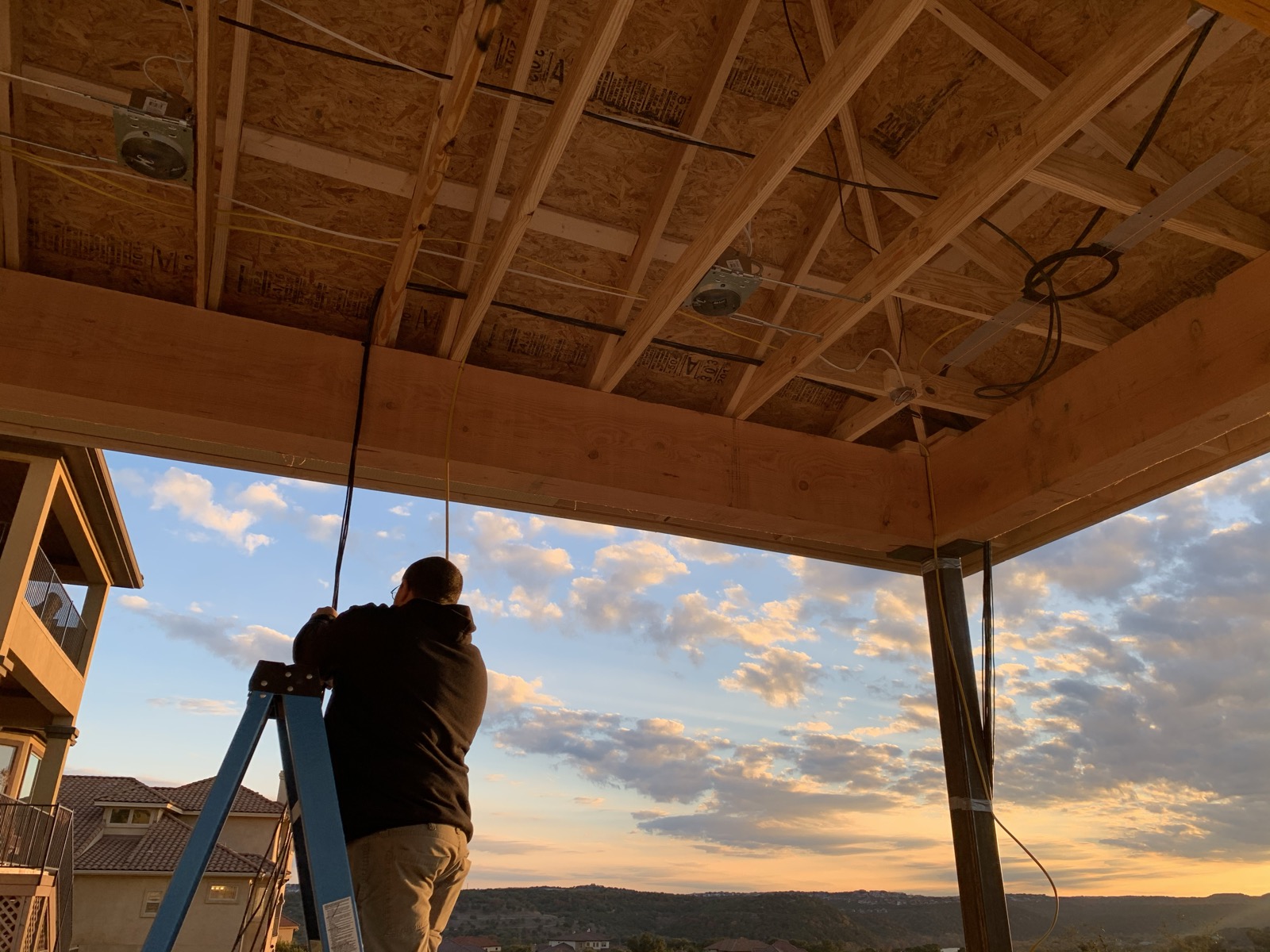
"Whether it is their expert help with network cabling to more easily work from home, hanging flatscreen TV's, a design/ build of a full media room or a rather involved, complex outdoor Pool Cabana project, the team at Bennett Technologies has the know how, tools and experience to deliver a world class result each and every time."
G V. · Google review
Wire Once
The cheapest time to run cable is before you need it.
Every TV, access point, camera, and speaker performs best on a wire. Like the network it carries, structured wiring is the backbone of a connected home: it strengthens reliability and reduces how much of your day rides on Wi-Fi and whatever interference is in the air. Planned during construction, those runs cost little; opened up later, they cost drywall.
Remodeling or working with an existing home? Many houses already have usable cable in the walls. Properly run phone lines can often be re-tasked and terminated as network cabling, which saves cost without cutting corners.
The Anatomy
What wiring done right is built from.
Five elements separate structured wiring from a bundle of cable in a wall. Each one shows up in how the home performs every day.
A Central Wiring Location
Every run in the home comes back to one place, planned as close to the center of the home's footprint as the structure allows. When the center is out of reach, we plan the runs carefully so performance holds anyway.
A Path for Every Service
Coaxial cable for legacy cable systems, Category 6 or better for IP feeds, and fiber or an open conduit any provider can pull through. Service enters once and lands at the central location, the demarcation point, with the modem beside the equipment it feeds.
Dedicated Clean Power
We specify that the electrician provide a dedicated 30-amp circuit and ground, trimmed out as a 20-amp receptacle. The equipment supporting your home runs on clean power that no other load in the house can pollute.
Home Runs to One Switch
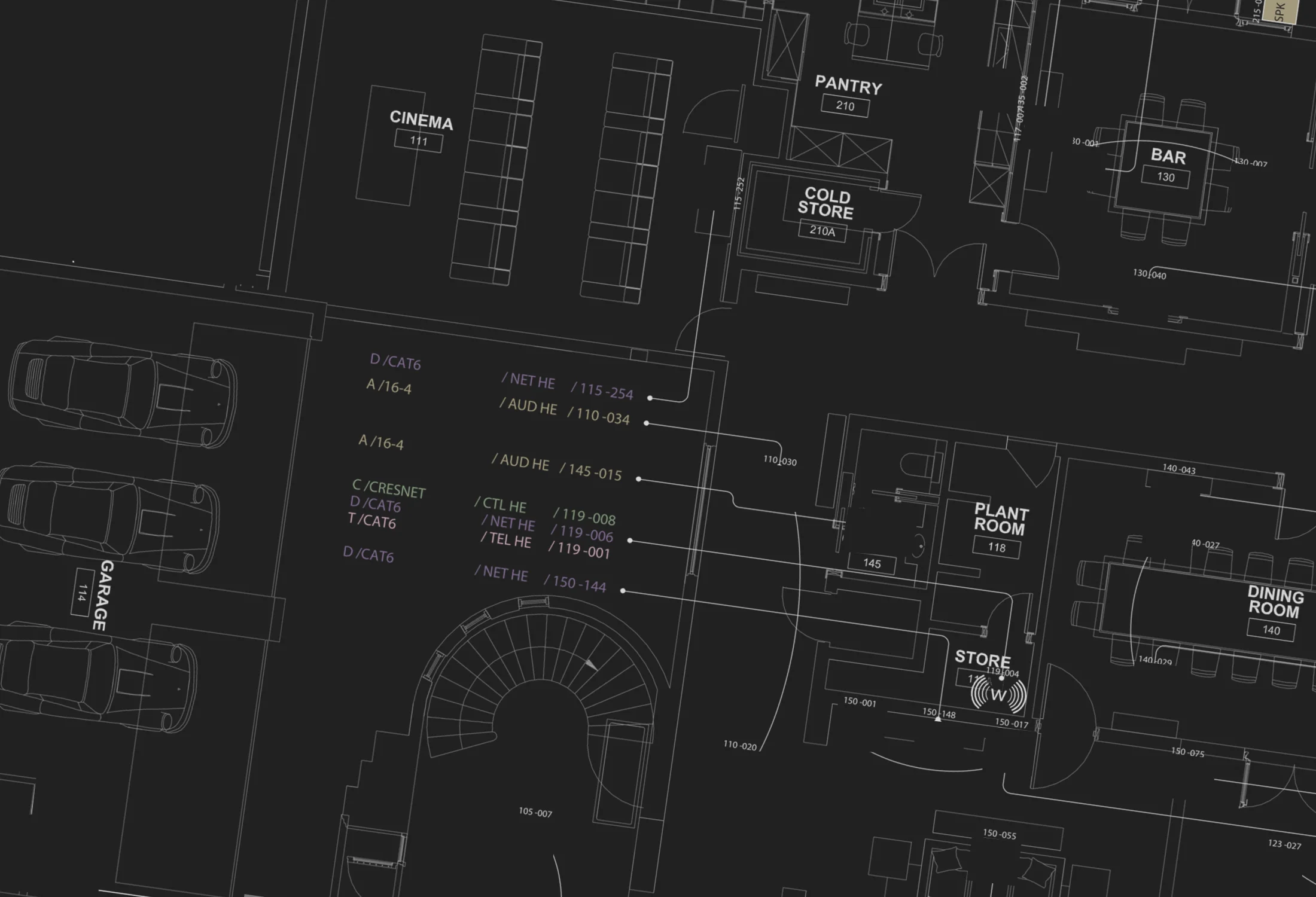
Each device that can take a wire gets its own cable back to a single core switch, so every connection runs at full speed and all of the traffic is managed in one place.
Terminated, Labeled, Tested
Machine-printed labels at both ends of every run, then testing for connectivity and for actual speed. The documentation outlives the project.
Wireless, Planned First
The Wi-Fi is designed before the cable is pulled.
A wiring plan starts with the network it will carry. We design the wireless first, around your home's footprint, its construction materials, where devices will actually be used, and access point locations that let a call or a stream follow you from room to room without dropping.
We optimize around the fastest band your system supports, because it is also the one with the shortest range and the tightest constraints. Design for that band and the whole home gets the speed it paid for, while 2.4 GHz, the oldest and slowest standard, comes along for free.
Built around the hardest band
5 GHz, and the newer Wi-Fi 7 bands above it, run faster, reach shorter, and lose the most to construction materials. That band sets the access point plan.
Heat maps when the home calls for it
Predictive heat mapping models coverage against the structure itself, placing each access point where the environment says it belongs. We use it whenever placement and coverage need that level of proof.
Wired where it counts
Once the wireless is placed, every location that benefits from a cable gets one. Wireless carries the devices that give us no other option.
The Home Run Standard
Count the devices behind your TV.
A TV location is rarely one device. A TV, a streamer, a soundbar, a disc player, a game console: each one can be wired, so each one gets its own cable.
How We Wire It
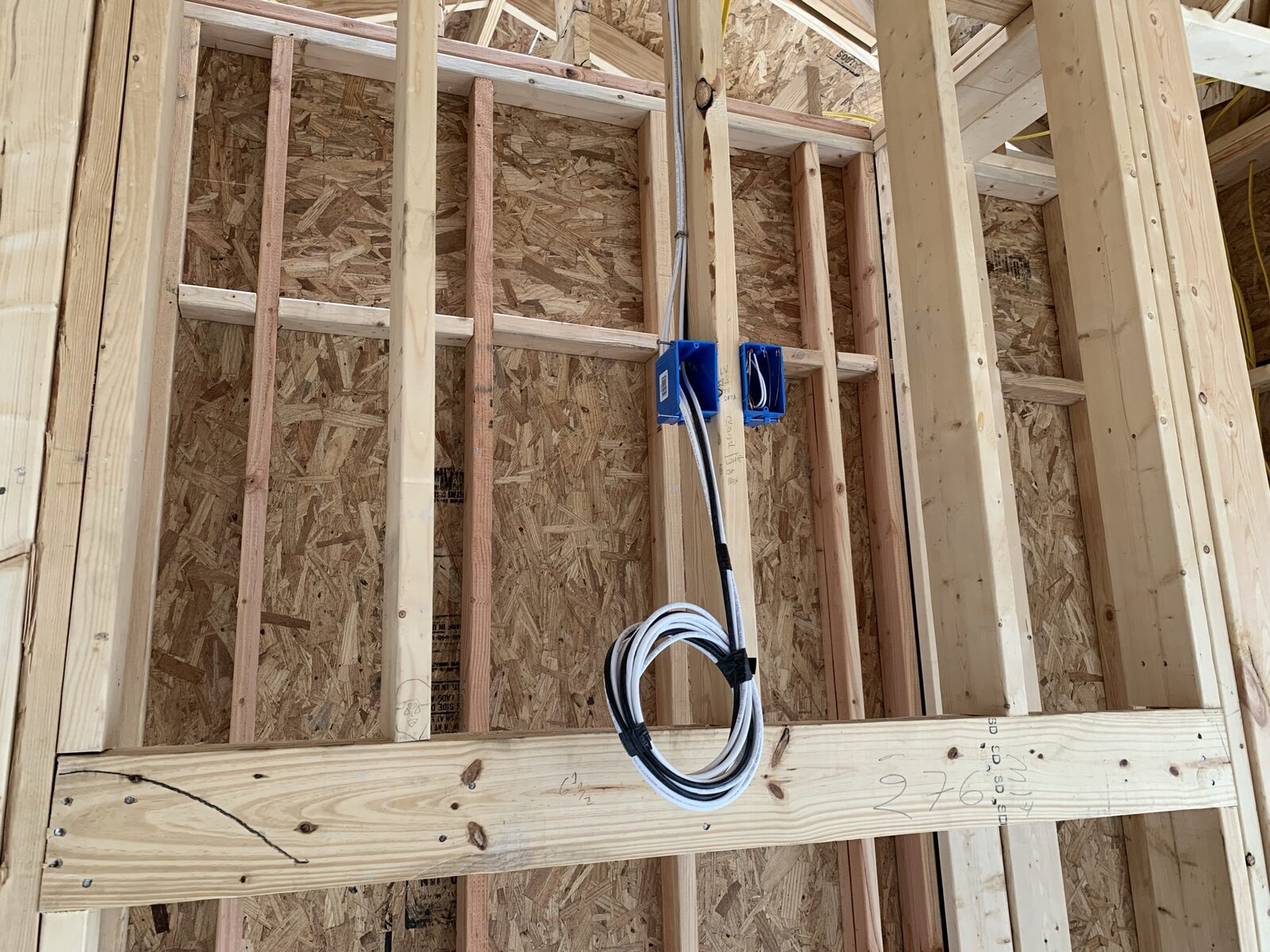
- A dedicated home run per device. Every device at every unique location gets its own cable back to the central location, plus one spare for whatever arrives next.
- One core switch manages it all. Every run lands on a single core switch, so each device gets maximum performance and all of the traffic is managed in one place.
The Shortcut Some Take
- A single line and a downstream switch. Some companies pull one cable and hang a small switch behind the TV. Every device now shares one gigabit link back to the network.
- One more thing to fail. That extra switch caps performance at the busiest spot in the house and adds a failure point where it hurts the most.
Clean Where You Can't See
Organized wiring, even where no one will ever look.
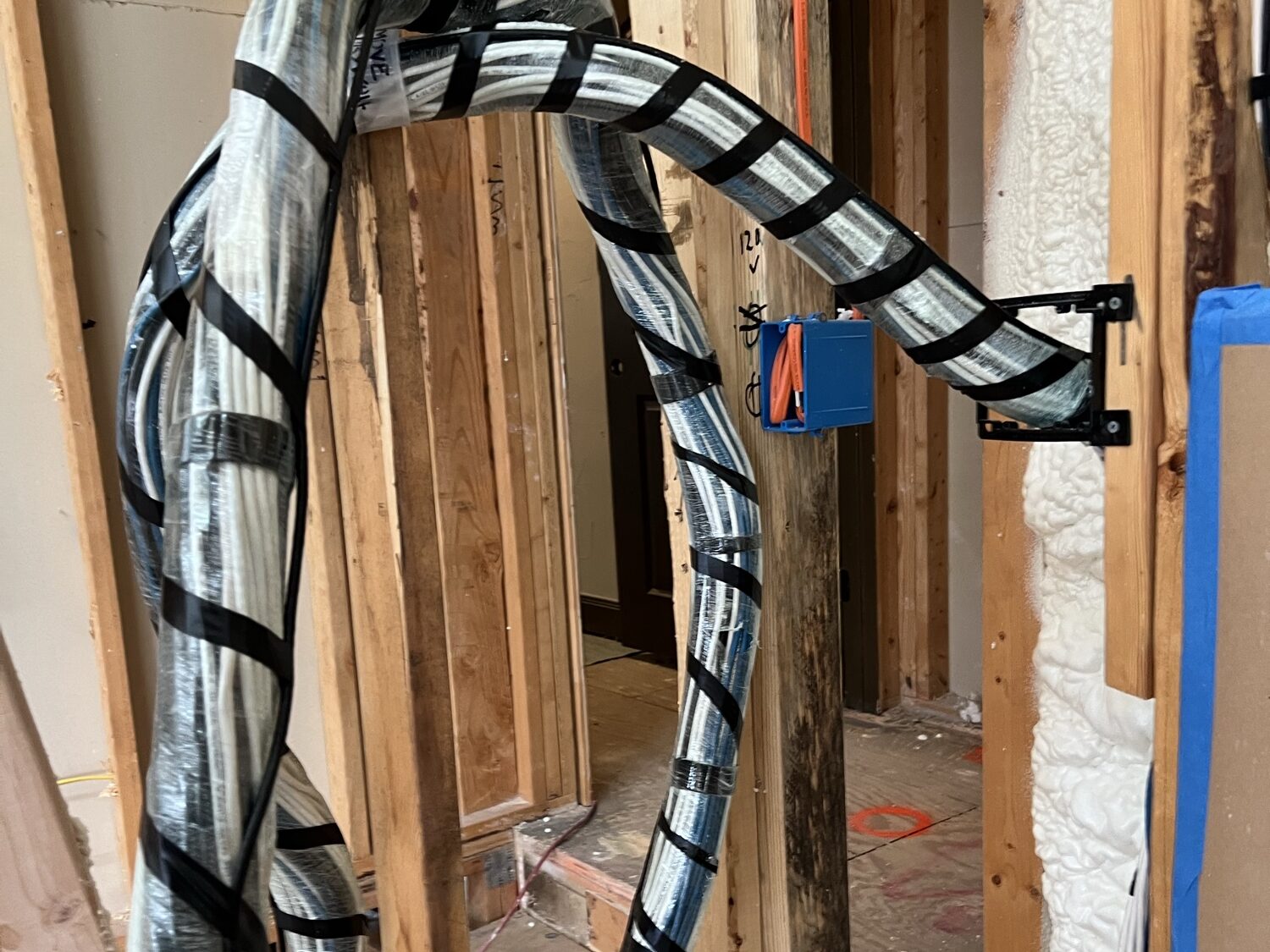
Our wiring goes in clean and organized, including the runs that disappear behind drywall. Data cabling keeps its distance from electrical wiring, because parallel runs pick up interference and the National Electrical Code sets rules for how low-voltage wiring is installed.
Those rules get broken most often when a builder hands the low-voltage work to whoever is already on site. We find it constantly in new construction, especially from the large national builders, usually justified by the most common falsehood in the trade: that wireless is all a home needs now. That line cuts the builder's cost on the day the walls close and leaves the homeowner paying for it in performance every day after.
Beyond the Network Cable
Every wire the project needs.
Structured wiring covers everything your goals call for, each run in the right type of cable and the right gauge (the wire's thickness) for the job it does.
Whole-home & outdoor audio
Speaker wiring for music inside the house and out across the property. Thin wire loses sound over distance, so where 16-gauge is common, our minimum is 14-gauge, a thicker wire, and we go to 12 for long or outdoor runs.
Outdoor runs & outbuildings
Wiring that leaves the main structure travels in protected conduit on dedicated runs: cabanas, pools, landscape audio, and the audio and video systems that live in the elements.
Specialty low voltage
Purpose-run wiring for the specific things you want your home to do. Here the right gauge depends on the job: a low-voltage power run might call for 24, 22, or 16 gauge, each sized to what it carries and how far, and matched before the walls close.
The Proof
When we plan a 10-gig network, you get a 10-gig network.
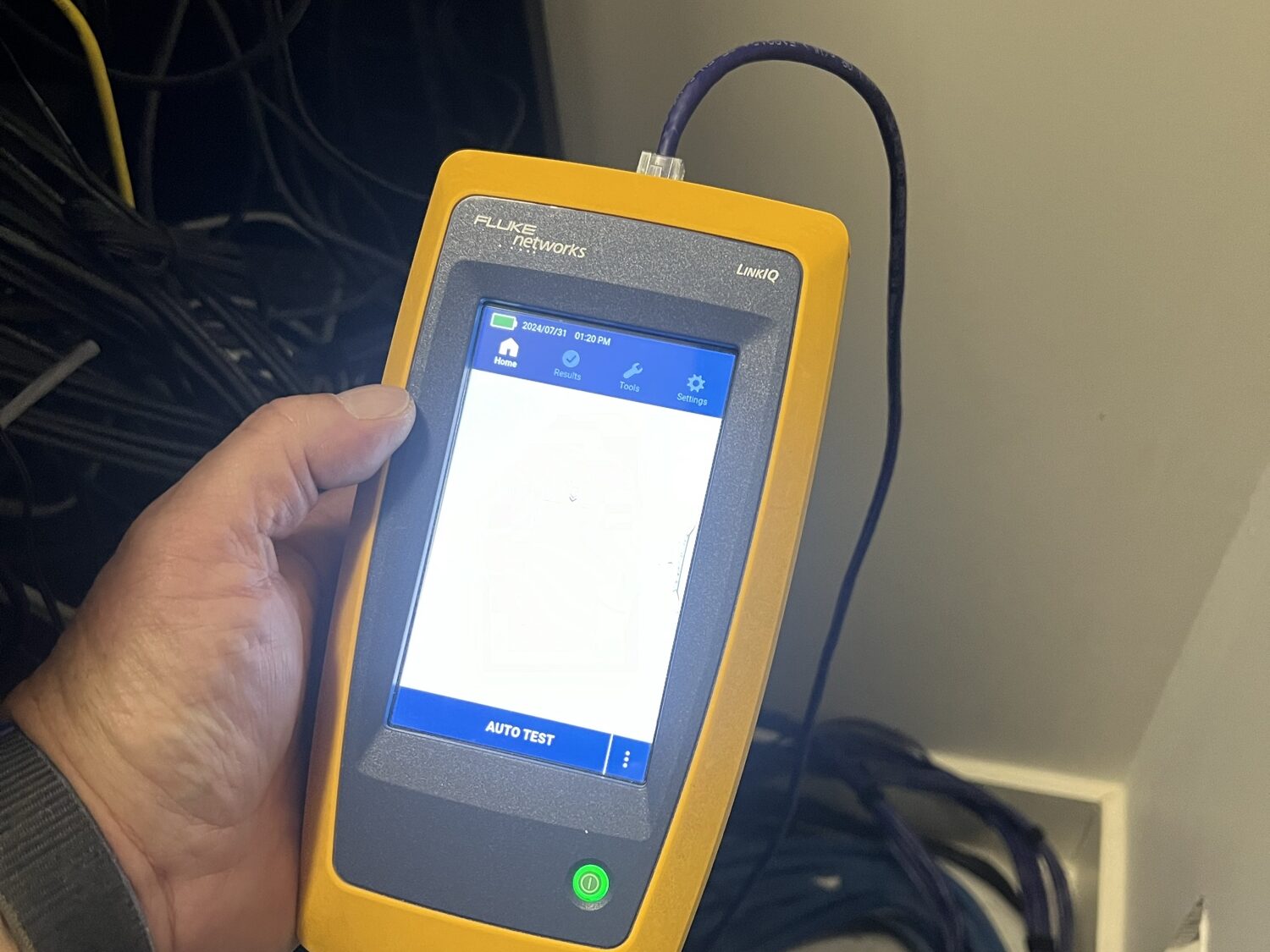
The final element of structured wiring is proving it. We terminate every run properly and label it at both ends with machine-printed labels, so the next person to open the panel knows exactly what is where.
Then we test every run, for connectivity and for actual speed, using cable-specific testers from Fluke. You receive the report showing the results the plan promised.
How We Work
From first walkthrough to years of support.
-
01
Consult
A conversation and a walkthrough. We learn how you use your spaces and what a win looks like for you.
-
02
Design
A documented plan: equipment, wiring, and budget, agreed on paper before anything is installed.
-
03
Install
Certified technicians run the wire, mount the gear, and program the system to the approved design.
-
04
Support
Remote monitoring and a real person to call. We service systems for years, including ones we did not install.
Questions, Answered
Structured wiring, answered
Is wireless really all you need in a new home?
That claim gets repeated a lot in new construction, and it is a cost-cutting measure for whoever repeats it. Wi-Fi is a shared medium: devices compete for the same airtime, so performance drops as the home fills up. Every device that can take a wire performs better on one, and every wired device frees airtime for the devices that have no other choice.
My house is already built. Is it too late to add wiring?
Retrofit wiring is routine work for us. We assess what already exists, re-task runs that test clean, and pull new cable where it counts, using attics, chases, and closets to keep the disruption small. New builds are the cheapest time to wire, but existing homes get the same standard.
Someone else wired my home. Can you finish or fix it?
Yes. We regularly complete, correct, and document wiring installed by other companies. We test every existing run, keep what passes, and fill the gaps, and the work gets the same attention as a new project.
What is a demarcation point, and why does it matter?
It is the spot where your internet and cable services enter the home, and it should be the same place all of your inside wiring comes back to. With coax, Category 6, and fiber or a conduit run from the point of entry to that central location, every current and future provider has a clean path, and the modem lives beside the equipment it feeds.
Why do you ask the electrician for a dedicated circuit?
We specify a dedicated 30-amp circuit and ground, trimmed out as a 20-amp receptacle, for the central equipment location. That gives the gear running your home a guaranteed amount of power on a clean ground, isolated from the motors, appliances, and other loads that pollute shared circuits. And because the circuit is wired for 30 amps from day one, the system can grow beyond 20 amps later with just a breaker and receptacle change.
What does structured wiring cost?
It depends on the size of the home and the scope of the plan. Wiring placed during construction costs a fraction of opening finished walls later, which is why we push to be involved before drywall. The consultation produces a documented plan with real numbers before you commit to anything.
Keep Exploring
Where to go next
The Foundation
Home networking & Wi-Fi
The cable carries the signal; the network makes it useful. See how we design Wi-Fi that holds up in every room of the house.
Audio & Video
Home theater
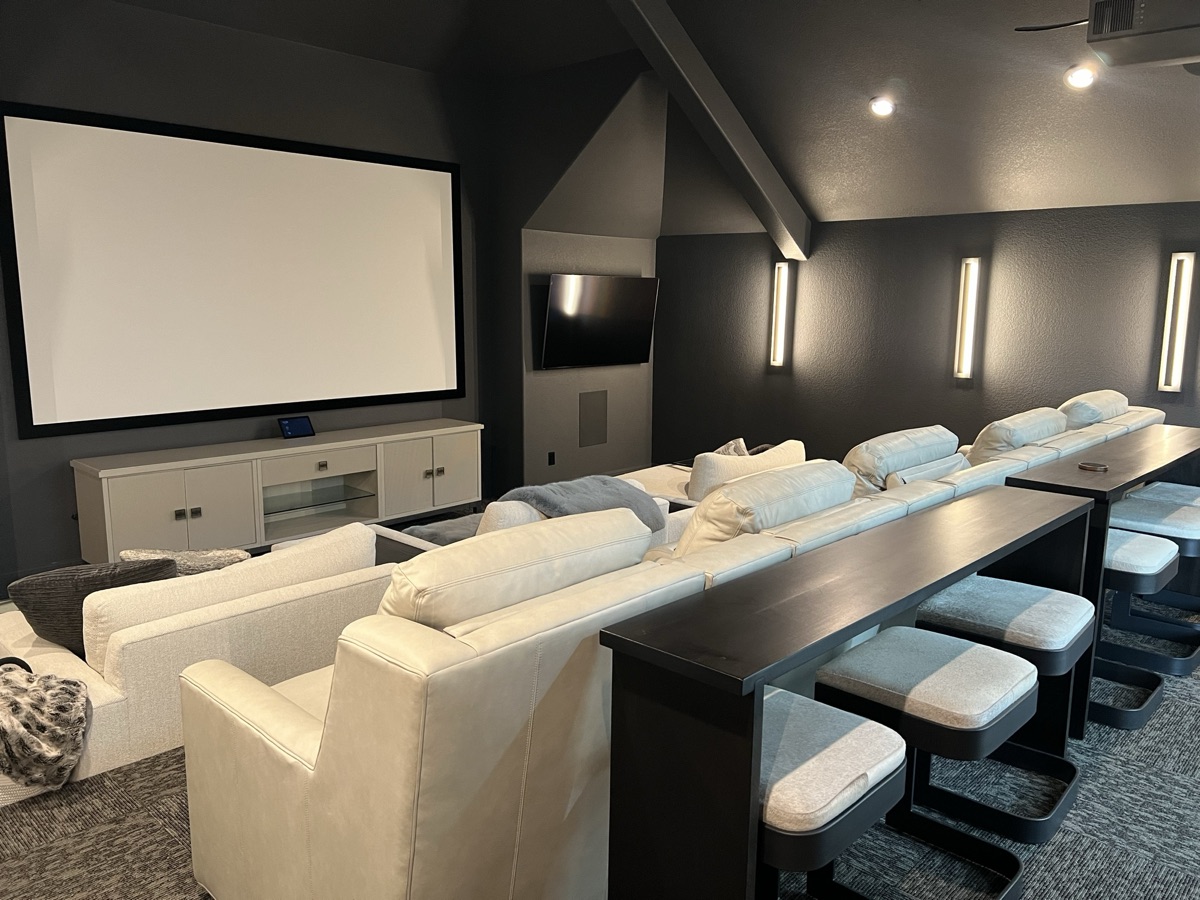
A dedicated theater is the most demanding thing a wall can hide. See what the right wire makes possible.
Control & Automation
Home automation
Wired keypads, touch screens, and shades outlast any wireless shortcut. See what runs on the backbone.
Ready to Build the Foundation?
Let's plan the wiring.
New build, remodel, or a cleanup of what's already in the walls. Schedule a consultation and we'll map it before anything gets cut.